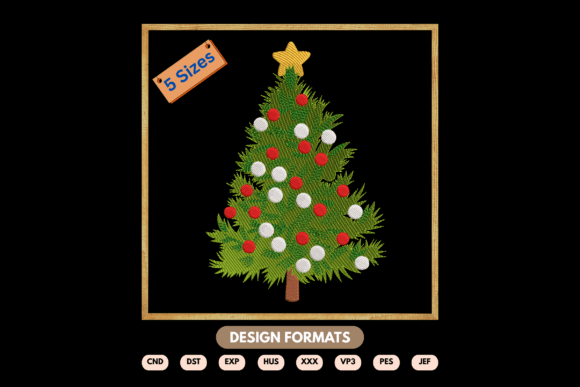
Decorated Christmas Tree: A Craft Fair Review
As an embroidery designer preparing for the upcoming holiday market season, my evaluation of a new machine embroidery design goes far beyond how it looks on a computer screen. When I first loaded the Decorated Christmas Tree file into my software, I was looking for that specific balance of tradition and commercial viability required for a successful weekend craft fair booth. This design captures the classic holiday spirit with a lush, green evergreen draped in shimmering golden garlands, but the true test lies in its translation to physical products. For fellow Etsy sellers, boutique makers, and creative entrepreneurs, understanding the practical application of this motif is essential for turning digital assets into profitable handmade products.
First Impressions and Booth Appeal
The immediate visual impact of the Decorated Christmas Tree is undeniably traditional yet vibrant. It does not lean into the minimalist or modern farmhouse aesthetic that has saturated recent markets; instead, it embraces a bold, festive nostalgia. The description mentions "adorable" elements alongside the golden garlands, suggesting a design that bridges the gap between elegant heirloom quality and approachable holiday cheer. From a distance, the high contrast between the deep greens and metallic golds will act as a visual anchor at a crowded market table. Customers scanning a booth from ten feet away need instant recognition, and this silhouette provides exactly that. It feels premium without being stuffy, making it an excellent candidate for giftable items where perceived value drives the purchase decision.
Best Performing Products for Market Sales
Not every embroidery file suits every product, and selecting the right canvas is half the battle for commercial embroidery success. Based on the stitch structure implied by a decorated tree motif, here is how I evaluate its performance across key inventory categories:
- Tea Towel Embroidery: This is likely your strongest seller. The vertical orientation of a tree fits perfectly on standard flour sack towels. The golden garland details will pop beautifully against white or cream linen, creating a high-contrast item that photographs exceptionally well for online listings.
- Tote Bag Design: Canvas totes are craft fair staples. The Decorated Christmas Tree works best here as a centered focal point rather than a corner accent. Ensure the design size is proportional to the bag; a tiny tree on a large market bag looks lost, while a massive one can distort the fabric.
- Apron Embroidery: Holiday baking is a major selling point in Q4. Placing this design on the bib or lower pocket of a festive apron creates an emotional connection with buyers looking for seasonal kitchen wear.
- Embroidered Patches: If the design includes clean satin stitch borders, it can be converted into a patch. This diversifies your price point, allowing customers who cannot afford a finished tote to still purchase your art.
- Pillow Covers: For higher-ticket items, this design offers enough detail to justify a premium price. The texture of the stitches mimics the texture of real tree branches, adding tactile value to home decor.
Production Practicality and Batch Efficiency
For small shop product lines, time is money. A beautiful design is useless if it takes four hours to stitch out or requires constant supervision. When reviewing the Decorated Christmas Tree for batch production, I assess the run order and jump stitches. Designs with excessive color changes slow down production significantly. Since this motif features specific gold garlands and green foliage, verify if the digitizer has grouped colors efficiently. Ideally, all green elements should stitch before switching to gold to minimize thread trims and machine stops.
Photographing this design for printable mockups or Etsy listings requires attention to lighting. Metallic threads can wash out in flash photography or look dull in low light. Natural, diffused lighting is necessary to capture the shimmer mentioned in the product description. If the design reads clearly in a thumbnail photo, it will perform better in search results. Furthermore, consider the repeatability of the design. Can you hoop three tea towels in succession without re-threading? Efficient hooping strategies for this specific tree layout will determine your profit margin during the busy holiday rush.
Critical Technical Considerations and Fabric Pairing
While the Decorated Christmas Tree is visually striking, certain technical constraints must be respected to ensure professional results. As experienced embroiderers know, dense fill stitches on lightweight fabrics are a recipe for disaster. If you plan to use this on delicate garments or sheer fabrics, you risk puckering or tearing. This design demands stable substrates.
Fabric Texture and Stabilizer: Textured towels and waffle-weave fabrics require a water-soluble topping to prevent stitches from sinking into the pile. Without this, the intricate details of the ornaments and garlands will disappear. Conversely, when stitching on caps, the curved surface and structured front panel present unique challenges. Ensure the design height does not exceed the safe stitching area of your cap frame, and use a sticky-back stabilizer to prevent shifting.
Size and Clarity: Be cautious when resizing this machine embroidery design downward. Complex details like tiny ornament hooks or thin garland strands may turn into muddy blobs if reduced below a certain threshold. Always check the minimum recommended size in the embroidery file metadata. Small lettering, if included in the design, is often the first casualty of resizing. If clarity is lost, opt for a larger format or choose a different product entirely.
Designer Notes for Commercial Success
Before listing any finished product derived from the Decorated Christmas Tree, adhere to these professional protocols to protect your brand reputation and avoid costly mistakes:
- Test Stitch on Actual Material: Never assume a digital preview equals reality. Run a test sew-out on the exact fabric and stabilizer combination you intend to sell. Check for registration issues where the gold garland meets the green tree.
- Verify Thread Contrast: Monitor your thread colors under both indoor booth lighting and natural daylight. Some gold metallics appear yellow indoors but bronze outdoors. Consistency matters for brand recognition.
- Confirm Hoop Size Compatibility: Double-check that the design dimensions fit comfortably within your hoop with adequate margin for tension. Crowding the hoop edges leads to distortion.
- Inspect Stitch Density: Feel the back of your test sample. If it feels bulletproof or stiff, the density is too high for apparel. Adjust settings or select heavier-weight items like tote bags instead.
- Create Real Mockups: Digital renderings are useful, but photos of the actual embroidered item build trust. Show the texture and scale relative to human hands or common objects.
- Review Licensing Terms: Crucially, confirm the commercial licensing for this digital embroidery file before mass production. Ensure you have the right to sell finished goods at craft fairs and online platforms.
The Decorated Christmas Tree represents a significant opportunity for holiday sales, provided it is executed with technical precision and strategic product placement. By respecting the interplay between stitch density, fabric choice, and market trends, you can transform this digital asset into a best-selling staple of your seasonal collection. Remember that customers at craft fairs are buying more than just thread on fabric; they are purchasing the warmth and craftsmanship that only a well-executed handmade product can provide. Take the time to test, refine, and present this design with the professionalism it deserves, and it will undoubtedly become a highlight of your holiday lineup.