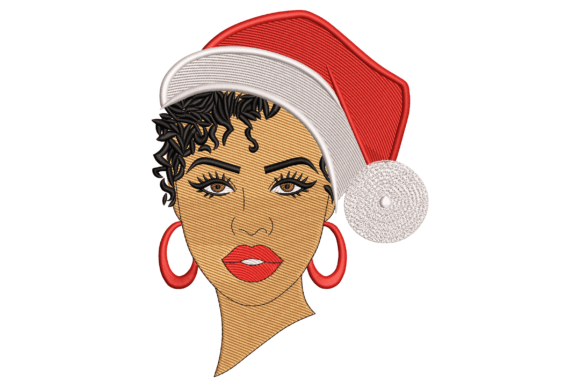
Santa Hat Girl: A Crafter’s Market Review
As an embroidery designer preparing for the upcoming holiday craft fair season, my evaluation process goes far beyond simply liking a graphic. I have to determine if a design will actually sell when stitched out on physical goods. When reviewing Santa Hat Girl as a potential centerpiece for my booth, I am looking at stitch economy, visual impact from three feet away, and versatility across different blank products. This machine embroidery design needs to work as hard as I do during the busy market weekends.
First Impressions and Booth Appeal
The immediate vibe of Santa Hat Girl is playful yet nostalgic. It strikes a balance between cute and classic, avoiding the overly cartoonish look that can sometimes cheapen a handmade product. For a craft fair table display, this aesthetic is crucial. Customers browsing quickly need to recognize the motif instantly. The silhouette of the hat combined with the feminine figure suggests a design that feels festive without being aggressive. It reads as "cozy holiday," which aligns perfectly with current trends in farmhouse and modern rustic Christmas decor.
From a distance, the contrast of the red hat against lighter fabrics will act as a visual anchor. In a sea of green and gold holiday items, that pop of red draws the eye. However, as a professional, I note that the success of this embroidery file depends entirely on color placement. If the hat blends into a dark red fabric, the design disappears. For my booth samples, I would prioritize cream, white, or light grey backgrounds to ensure Santa Hat Girl remains the focal point.
Evaluating Product Versatility for Sellers
A successful digital embroidery file must be adaptable. I cannot afford to hoop up ten different designs for ten different products; I need assets that cross-pollinate. Here is how I see Santa Hat Girl performing across key categories:
- Tote Bag Design: This is likely the strongest performer. Canvas tote bags offer a stable, flat surface ideal for detailed stitching. Santa Hat Girl centered on a natural canvas bag creates a premium reusable gift bag alternative. The design size here can be maximized to showcase thread texture.
- Tea Towel Embroidery: Kitchen textiles are high-volume sellers at markets. Because tea towels are often textured (flour sack or terry), I would test the stitch density carefully. If the design is too dense, it will pucker the towel. If it is too sparse, it gets lost in the weave. A medium-weight tear-away stabilizer is non-negotiable here.
- Apron Embroidery: Placing this design on the bib of a linen apron transforms a utility item into a boutique piece. The vertical orientation of a girl in a Santa hat typically fits the apron bib geometry better than wide landscape scenes.
- Embroidered Patch: For smaller price-point items, converting Santa Hat Girl into a merrowed-edge patch allows for batch production. These can be sold as standalone add-ons or applied to denim jackets and caps later.
- Fabric Pouches and Pillow Covers: These items allow for higher margins. The design adds perceived value to simple cotton blanks, justifying a higher price tag for Etsy sellers and boutique makers.
Production Practicality and Stitch Integrity
Before listing any finished product, I must address the technical reality of embroidering Santa Hat Girl. Visual appeal means nothing if the registration is off or the fabric tunnels.
Managing Stitch Density and Fabric Texture
I always inspect the stitch density before running a full production batch. If Santa Hat Girl features solid fill areas in the hat or dress, I need to ensure there is adequate underlay. On thick fabrics like fleece or minky, standard fills may sink. Conversely, on lightweight quilting cotton, heavy fills might cause distortion. My advice is to run a test stitch-out on scrap fabric that matches your final product weight exactly. Do not assume a setting that worked on felt will work on a tea towel.
Detail Clarity at Different Sizes
One common pitfall with character-based Christmas embroidery is resizing. If you shrink Santa Hat Girl down for a small pouch or baby bib, verify that facial features or intricate trim details remain distinct. Tiny satin stitches can turn into blobs if reduced below 70% of the original size. Always check the minimum recommended dimensions provided by the digitizer. If those specs aren't listed, measure the smallest detail in your software and ensure it exceeds 1mm after resizing to prevent needle breaks and poor definition.
Merchandising and Online Presentation
For Etsy sellers and digital creators, the transition from physical booth to online listing requires strategy. Santa Hat Girl photographs best when there is clear negative space around the design. Avoid cluttering the background in your product photos. Use natural lighting to capture the sheen of the rayon or polyester threads, as this communicates quality to online buyers who cannot touch the item.
When creating printable mockups for digital sales, ensure the placement looks realistic. A flattened, distorted mockup kills conversion rates. Show the design curved slightly over a pillow or draped on a bag to demonstrate how the embroidery file behaves on dimensional objects. This builds trust with other crafters purchasing the design for their own commercial embroidery ventures.
Critical Pre-Production Checklist
To protect your brand reputation and minimize wasted materials, follow these professional guidelines before selling any item featuring Santa Hat Girl:
- Verify Commercial Licensing: Never assume you can sell finished products. Check the specific license terms included with the embroidery file. Some designers restrict mass production or require attribution.
- Test Thread Contrast: Stitch a sample using your intended holiday palette. Ensure the skin tone (if applicable) doesn't blend into beige fabric and that the hat stands out against red backgrounds.
- Confirm Hoop Size Compatibility: Measure the actual stitch area, not just the hoop size. Leave at least a half-inch buffer to prevent the foot from hitting the hoop edges during high-speed stitching.
- Select Proper Stabilizer: Match the stabilizer to the end use. Cut-away for wearables and stretchy fabrics; tear-away for stable woven goods like totes and towels; water-soluble for napped fabrics where residue is a concern.
- Create Physical Samples: Digital renderings do not show tension issues. Make at least one real finished product to photograph and to serve as a quality benchmark for future batches.
- Check Small Lettering: If the design includes text like "Noel" or a name, ensure it is legible. If not, consider removing the text element for smaller applications to maintain clarity.
Final Verdict for Holiday Markets
Santa Hat Girl holds significant promise for the upcoming season. Its blend of traditional holiday imagery and approachable style makes it a safe but profitable choice for handmade businesses. Whether you are stocking a physical booth with embroidered gifts or updating your Etsy shop with festive digital assets, this design offers strong merchandising potential. Success lies in the execution: proper stabilization, thoughtful color choices, and rigorous testing. Treat this design with the same professional scrutiny as any core collection asset, and it will likely become a seasonal bestseller for your creative business.