Bird with Santa Hat: A Designer’s Stitch Test Review
When sourcing holiday graphics for a seasonal product line, the difference between a generic clip-art file and a professionally digitized machine embroidery design is often found in the stitch pathing. As a designer who regularly evaluates assets for both personal crafting and commercial production, I approached the Bird with Santa Hat design with a specific set of criteria. It is not enough for an embroidery file to simply look festive on a screen; it must perform under the needle, withstand washing, and translate into a high-value finished product that customers actually want to buy or receive as a personalized gift.
First Impressions and Visual Personality
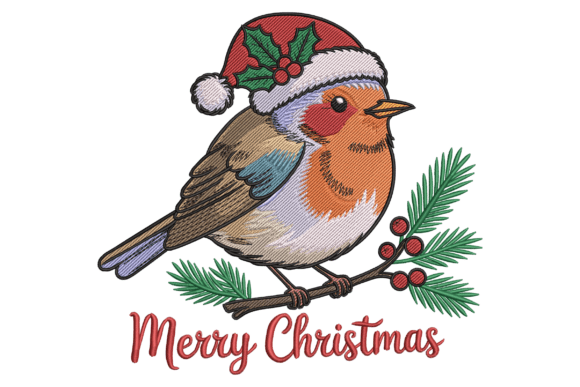
My initial assessment of this bird with Santa hat motif focuses on its visual hierarchy and emotional resonance. For Christmas embroidery to succeed in a crowded market, it needs character rather than just recognizable symbols. This design strikes a balance between whimsy and traditional holiday aesthetics. The shape suggests a rounded, friendly silhouette that works exceptionally well for baby embroidery, nursery decor, or lighthearted custom apparel. However, the success of this piece relies heavily on how the digitizer handled the transition between the bird’s natural texture and the structured satin stitch of the Santa hat. If these elements are not visually distinct in thread, the design can flatten out and lose its charm once stitched.
From a layout perspective, the composition feels centered and stable. This is crucial for hoop size efficiency. A well-balanced design allows you to maximize your stitching area without requiring excessive repositioning or oversized hoops, which is a significant factor for Etsy sellers and small shop owners managing production costs. The mood is undeniably cheerful, making it a strong candidate for holiday gifts, tea towels, and boutique branding where warmth and approachability are key selling points.
Real-World Application: The Holiday Sweatshirt Test
To truly evaluate this digital embroidery file, I mentally placed it in a real-life production scenario: creating a batch of unisex holiday sweatshirts for a craft fair. Sweatshirt fleece presents unique challenges due to its loft and stretch. When applying this bird with Santa hat design to knit fabric, stitch density becomes the primary concern. If the fill stitch areas are too dense, the design will become bulletproof and stiff, ruining the drape of the garment. Conversely, if the density is too light, the fleece texture will poke through, making the embroidery look cheap and unfinished.
In this application, I would pay close attention to the underlay stitches. A proper edge run or center walk underlay is non-negotiable here to prevent the fabric from shifting during the satin stitch portions of the hat brim and beak. For a handmade product intended for sale, clarity is synonymous with quality. Customers judge value based on clean edges and smooth coverage. If this design includes intricate feather details, they must be executed with running stitches that are thick enough to be visible against the textured background but fine enough to maintain detail. This level of execution determines whether the item reads as professional commercial embroidery or a hobbyist experiment.
Navigating Fabric Limitations and Hoop Constraints
While this design has broad appeal, there are specific contexts where caution is required. Not every embroidery project is suitable for this motif. I would advise against using this design on highly textured fabrics like terry cloth or boucle unless it is specifically digitized as an applique design with a strong tack-down stitch. The delicate features of a bird’s face and the trim of a Santa hat can easily get lost in deep pile fabrics, resulting in poor stitch registration and frustrated clients.
Small hoop sizes also present a risk. If you are attempting to resize this design down for a baby onesie or a pocket logo, verify the minimum safe dimensions before stitching. Reducing complex designs often causes satin stitches to become too narrow to cover properly or causes jump stitches to overlap in ways that create thread breaks. Always check the original digitizer's notes regarding resizing limits. Additionally, when working with dark fabrics, ensure the design includes adequate contrast or a white underlay base. A red Santa hat on a burgundy sweatshirt might look beautiful digitally but disappear physically without proper color planning.
Curved surfaces like caps require special consideration. Unless this bird with Santa hat is specifically digitized for curved hooping, placing it on a structured cap may result in distortion at the top and bottom edges. Flat hoop embroidery projects like tote bags, pillow covers, and aprons are generally safer bets for maintaining the intended proportions of this artwork.
Enhancing Product Value and Customer Trust
For creative entrepreneurs and makers, the choice of design assets directly impacts brand consistency and buyer engagement. Using a high-quality version of this bird with Santa hat signals professionalism. When customers see crisp satin columns, aligned trims, and thoughtful color blending, their trust in your shop increases. This is particularly important for personalized gifts where the recipient expects heirloom quality.
Visual appeal extends beyond the physical stitch-out. Consider how this design translates to printable mockups and digital product previews. A design with clear outlines and distinct color blocks photographs better and is easier to edit in listing images. For those selling finished products, pairing this embroidery with complementary typography or simple border elements can elevate the perceived value. However, avoid overcrowding the design. Let the bird be the focal point. Negative space is just as important as stitch coverage in creating a polished, high-end look.
Essential Pre-Stitch Checklist for Makers
Before committing this design to a final product or listing it in your shop, run through these practical verification steps to ensure success:
- Test on Scrap Fabric First: Never assume settings are perfect. Stitch a sample on the exact fabric and stabilizer combination you intend to use for the final project.
- Verify Stabilizer Choice: Match the stabilizer weight to the fabric texture and stitch density. Cut-away is usually best for knits and apparel, while tear-away may suffice for woven tote bag designs.
- Check Thread Color Contrast: View your thread palette in natural lighting. Ensure the Santa hat red pops against the bird’s body color and the background fabric.
- Inspect Small Details: Zoom in on the embroidery file in your software. Look for tiny satin stitches that might fray or pull out after washing.
- Review Licensing Terms: Confirm whether your purchase includes commercial rights for selling finished items or if it is restricted to personal use. This is vital for Etsy sellers and business owners.
- Mockup Testing: Create black and white versions of your product photos to test if the design holds up without color reliance. Strong value contrast ensures visibility in thumbnail images.
- Confirm Hoop Size Compatibility: Double-check that the design fits comfortably within your machine’s maximum stitch area with room for hoop clearance.
Final Thoughts on Design Versatility
The Bird with Santa Hat serves as a versatile asset for the holiday season, provided it is treated with technical respect. Whether you are producing custom apparel, decorating nursery blankets, or creating embroidered patches for seasonal merchandise, the key lies in understanding the interaction between the digital file and the physical substrate. By prioritizing stitch integrity, appropriate fabric selection, and thorough testing, you transform a simple graphic into a profitable, professional-grade embroidery project. Remember that in our industry, the best design is one that looks as good after fifty washes as it did coming off the machine. Take the time to validate your materials and methods, and this charming holiday motif will undoubtedly become a staple in your seasonal collection.